My parents, Helen and George, were married on a wet Saturday in October 1974 at the Glasgow registry office on Park Circus. They were both twenty-one. My grandfather had to lend my father the money for the suit. My mother's sister made her dress. There are exactly four photographs from that day, all of them taken by my uncle on a borrowed camera, three of which my mother considers unflattering and one of which she has kept in a frame on her dressing table for fifty years.
This past October was their fiftieth wedding anniversary. Their golden, as my aunt has been calling it for the better part of a year. The whole family agreed that we wanted to do something for it. My older sister Catriona organised dinner at the hotel where my father proposed. My brother Andrew and his wife flew in from Toronto with their kids. I, being the unmarried one with no dependants and therefore (according to family tradition) the most time on my hands, was put in charge of the gift.
Why a portrait
My parents have everything they need. They have a comfortable house, a garden my father has been improving for thirty years, a dog, more books than shelves, and an active social life that includes a frankly alarming amount of bowls. There is nothing you can buy them that they do not already have. The only thing they do not have, and the thing I had been thinking about for months, was a proper portrait of themselves.
The four photographs from their wedding are tiny. The one on my mother's dressing table is maybe four inches square. There has never been anything on the wall of their hallway except a series of school photographs of us three, frozen at unflattering ages between 1987 and 1996. I wanted something for the wall above the fireplace in their living room, which has been notably bare for as long as I can remember.
Finding the right style
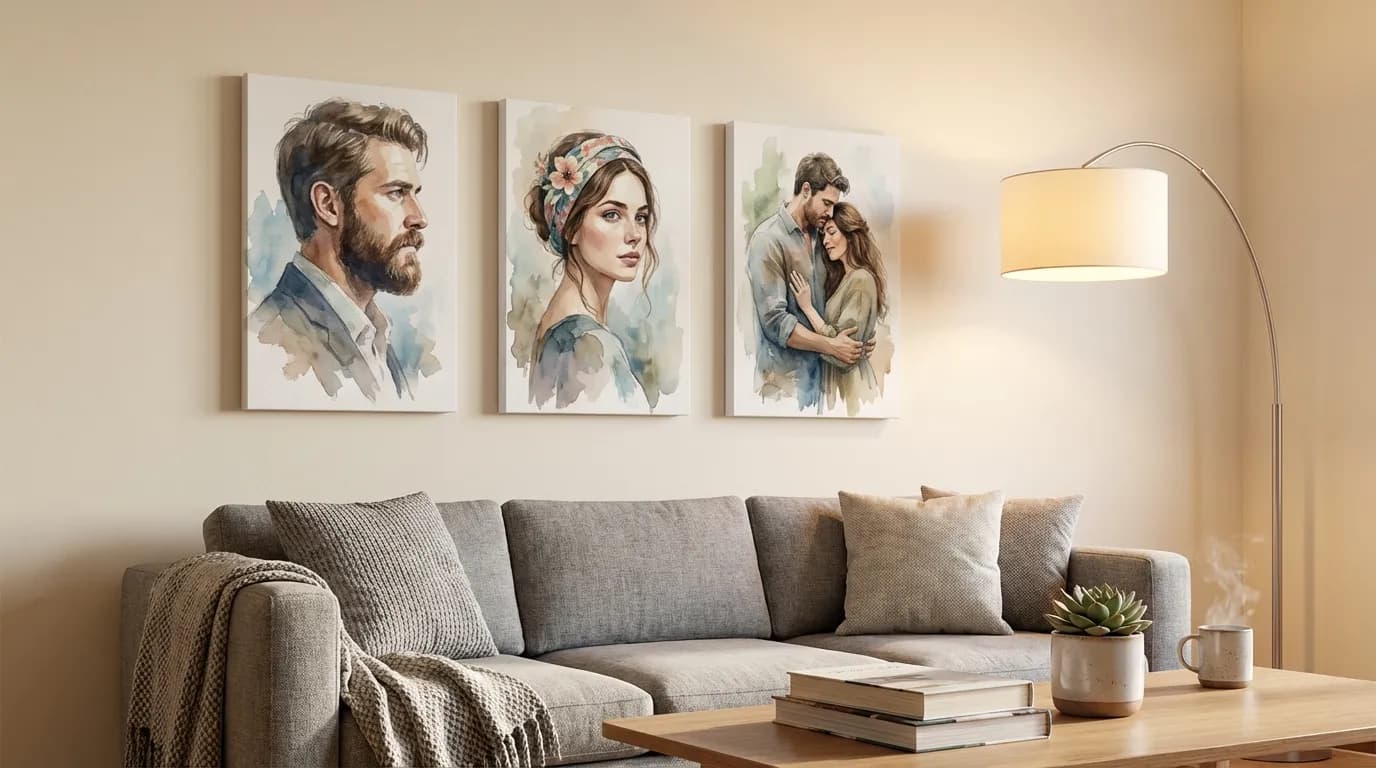
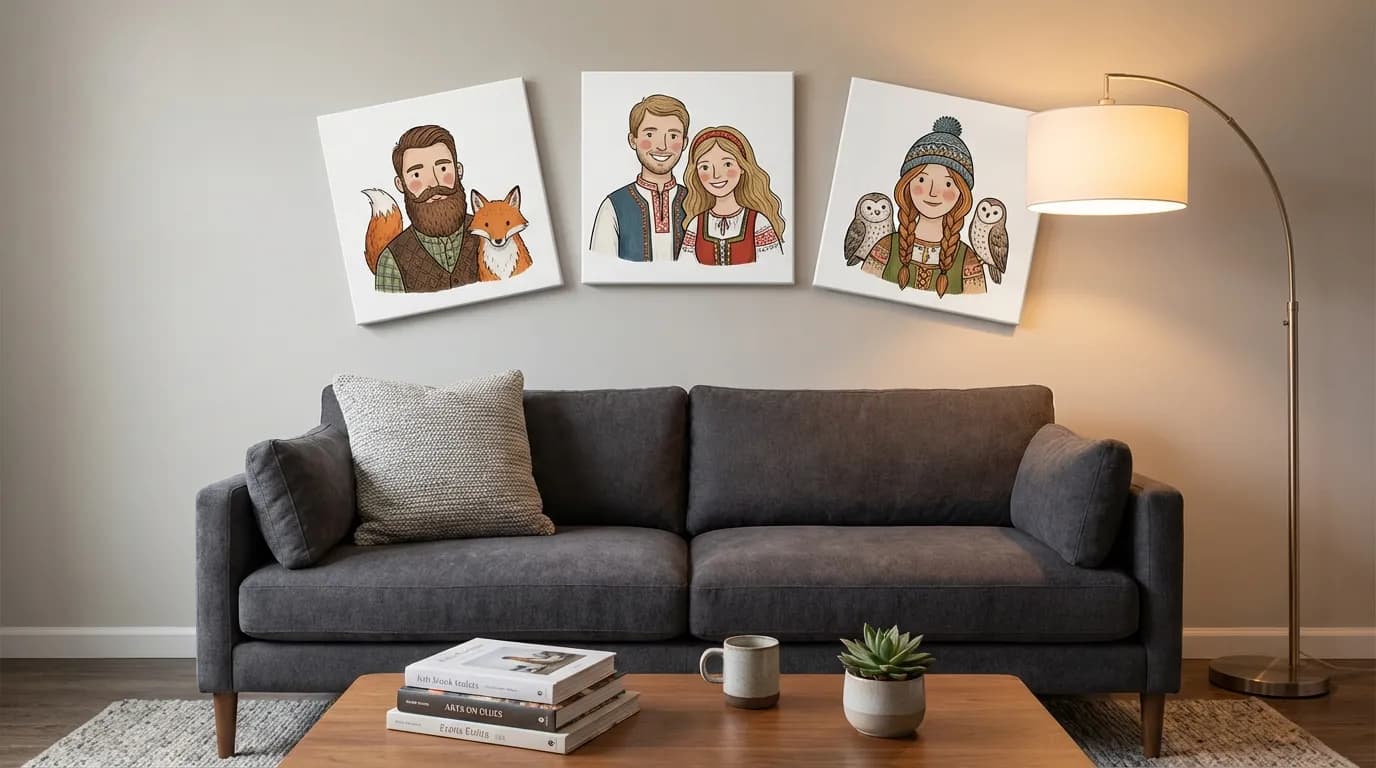
I knew almost immediately that I did not want a watercolour or a cartoon or anything modern. My parents' taste is firmly traditional. My mother loves the Burrell Collection, my father can name half the works in Kelvingrove without looking at the labels. They are the kind of people who, if they were going to have a portrait of themselves, would want it to look like it had hung in a Georgian drawing room. Rembrandt. Vermeer. That world.
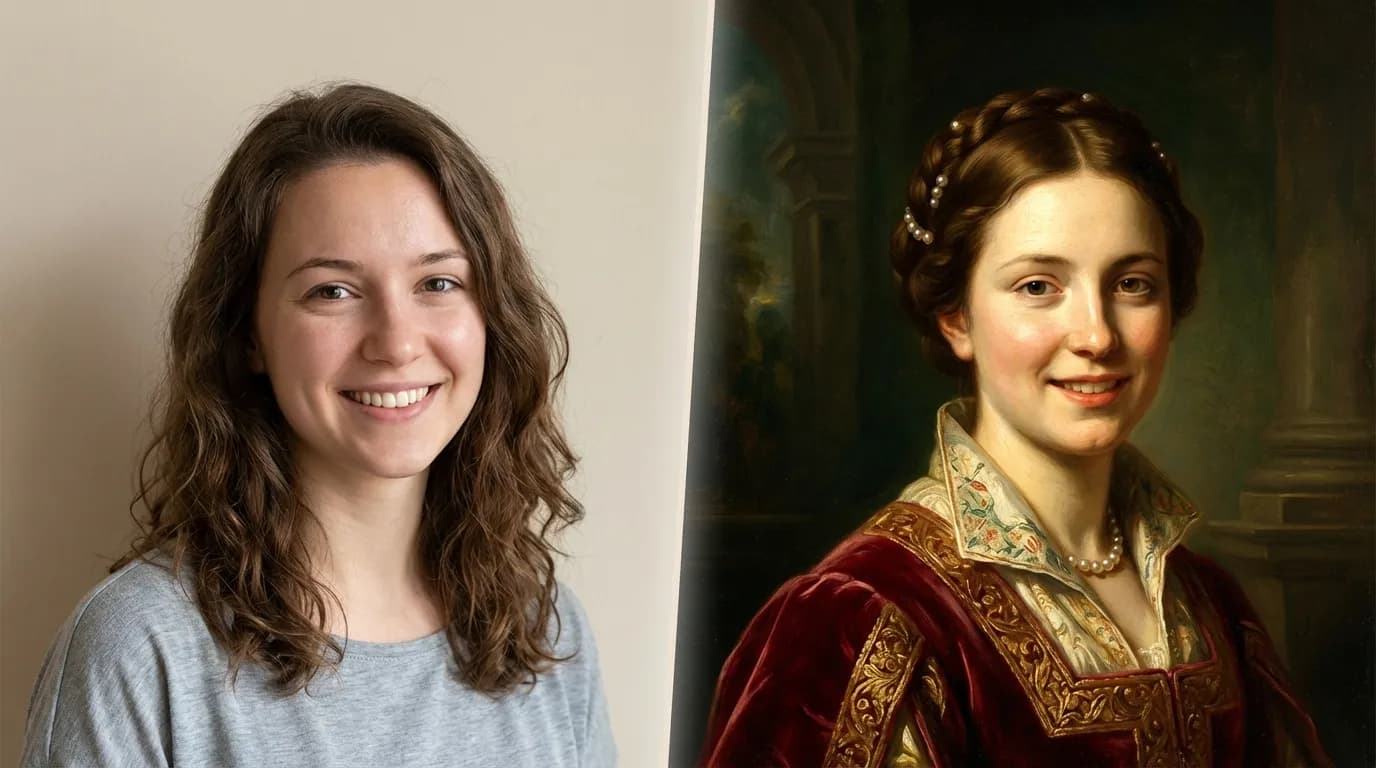
I had seen a Facebook ad for FrameArto a few weeks earlier and bookmarked it because the renaissance oil painting style on the landing page actually looked like an oil painting. I have an art history background (long story, did not turn into a career) and I am the worst kind of pedant about this stuff. Most AI portraits I had seen looked like Instagram filters with a brush effect over the top. The FrameArto samples actually had the layered glaze quality, the warm chiaroscuro, the soft brushwork that distinguishes a real oil from a digital painting that wishes it were one.
I have an art history background and I am the worst kind of pedant about this stuff. The fact that I did not wince once when I looked at the final canvas tells you everything you need to know.
The photo
I went round to my parents' house in September on a made-up errand and, while my mother was distracted by my father making her a cup of tea wrong, I quietly took her tiny dressing-table photograph and scanned it on my phone. It was the one of them on the registry office steps in 1974, my mother in her hand-made cream dress, my father in the borrowed suit, both of them looking impossibly young and impossibly happy and slightly damp from the Glasgow rain.
The original was small and grainy and the colours had drifted into a uniform tea-stained brown. I uploaded it that night and chose the renaissance oil style. The first set of previews came back in about three minutes. I will be honest, I was nervous. I had not told anyone what I was doing in case it turned out badly. I opened the previews on my laptop with a glass of wine, the same as Amanda did in the previous story I read on this site, and I sat there for a long time looking at them.
The AI had done something I did not expect. It had not just brushed an oil paint filter over the photo. It had relit them, given them the warm Rembrandt side-light coming from the left, deepened the shadows, brought out the texture of her cream dress and the weave of his suit. It had kept my mother's exact smile, the one I have been seeing for forty-two years, and my father's exact slight stoop, like he was always a little surprised to be that tall. I tried two retries to fine-tune the background and ordered a large canvas, twenty-four by thirty inches, in a dark wood frame.
The reveal
The canvas arrived three weeks before the dinner. I kept it at my flat. The day of the anniversary, Catriona and I went round to the hotel early and set the canvas, draped in a sheet, on an easel at the head of the family table. My parents arrived to find twelve of us standing around it. My mother saw it and laughed and said, "what on earth have you done, Marcus."
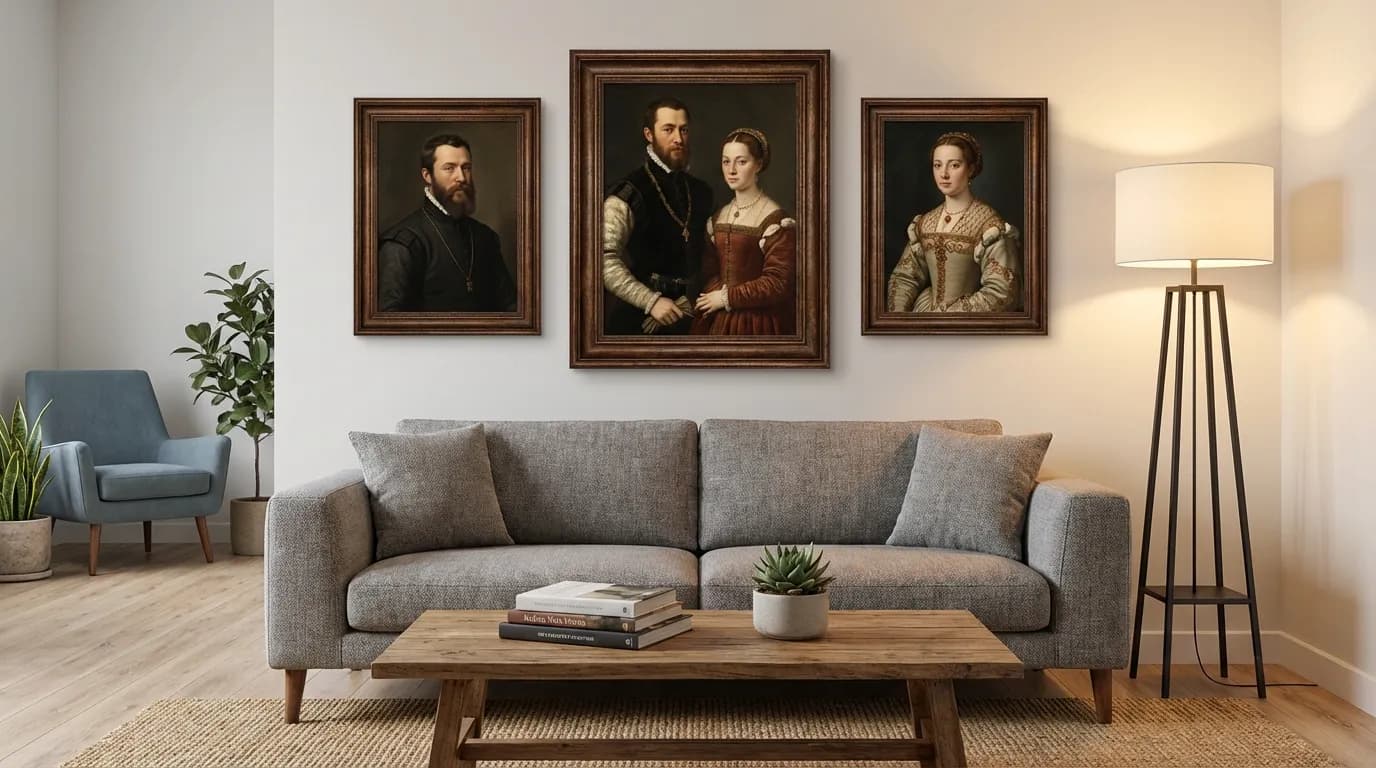
I pulled the sheet off and the whole table went quiet. My mother put one hand on the canvas and one hand on my father's arm and she just kept saying, "look at us. Look at us." My father, who has not cried in public since his own father's funeral in 1996, took out his handkerchief and did not bother to hide it. My niece, who is nine, said in a stage whisper to her mother, "Granny is being beautiful." Which was, I think, exactly the right thing for anyone to say.
Above the fireplace
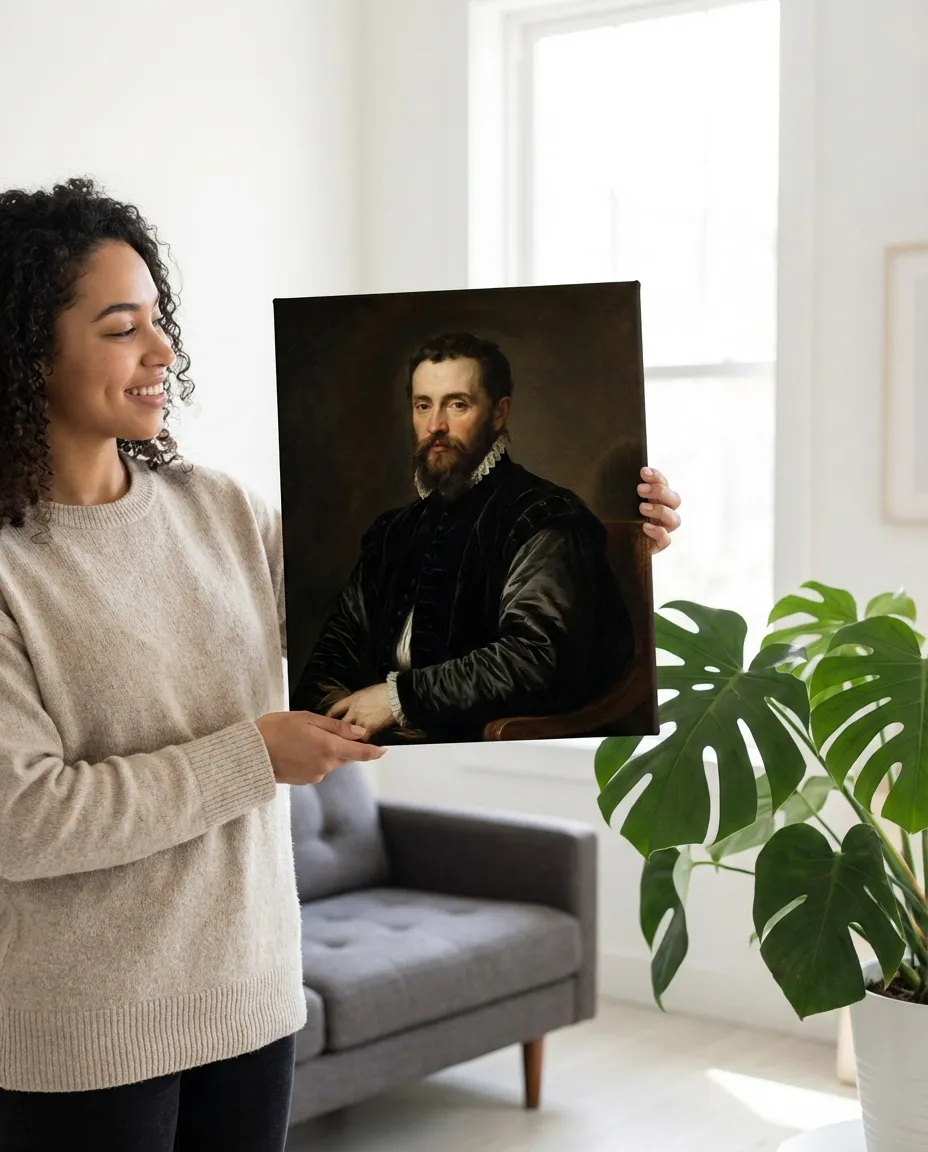
The canvas now hangs above the fireplace in their living room. Where there had been nothing for forty years, there is now the two of them on their wedding day, painted as if by a seventeenth-century master, twenty-one years old and damp from the rain and madly in love. Every time I visit my mother asks me how on earth I made it. I keep telling her about FrameArto but I suspect she does not entirely believe me and has decided I commissioned a real painter in secret.
A note to anyone considering this for older relatives. If the photograph you are working from is small or grainy or yellowed with age, do not assume that disqualifies it. The renaissance style actually benefited from working with an imperfect source. It gave the AI room to interpret rather than copy. Pick the photograph that means the most. Not the clearest. The most loved. That is the one that will sing on the wall.
“My mother put one hand on the canvas and one hand on my father's arm and she just kept saying, "look at us. Look at us."”
Marcus W., Glasgow, Scotland