Persian, Maine Coon, or Mixed: Choosing a Portrait Style by Cat Type
Different cat breeds reward different portrait styles. A founder breakdown of the styles that flatter Persians, Maine Coons, short-haired breeds, and the mighty Domestic Mixed.

Builds AI art tools that real customers actually love. Obsessed with the craft of digital portraiture and the small details that make a portrait feel like a gift.
Cats sell more portraits at FrameArto than people often guess. They are the second most ordered subject after dogs and the most ordered if you weight by canvas size, because cat people tend to commit to wall pieces. The trick is that breed type shifts the right style noticeably more than it does for dogs. A Persian and a Siamese are visually two different animals, and treating them the same way at the portrait stage leaves quality on the table.
Persians and other flat-faced breeds
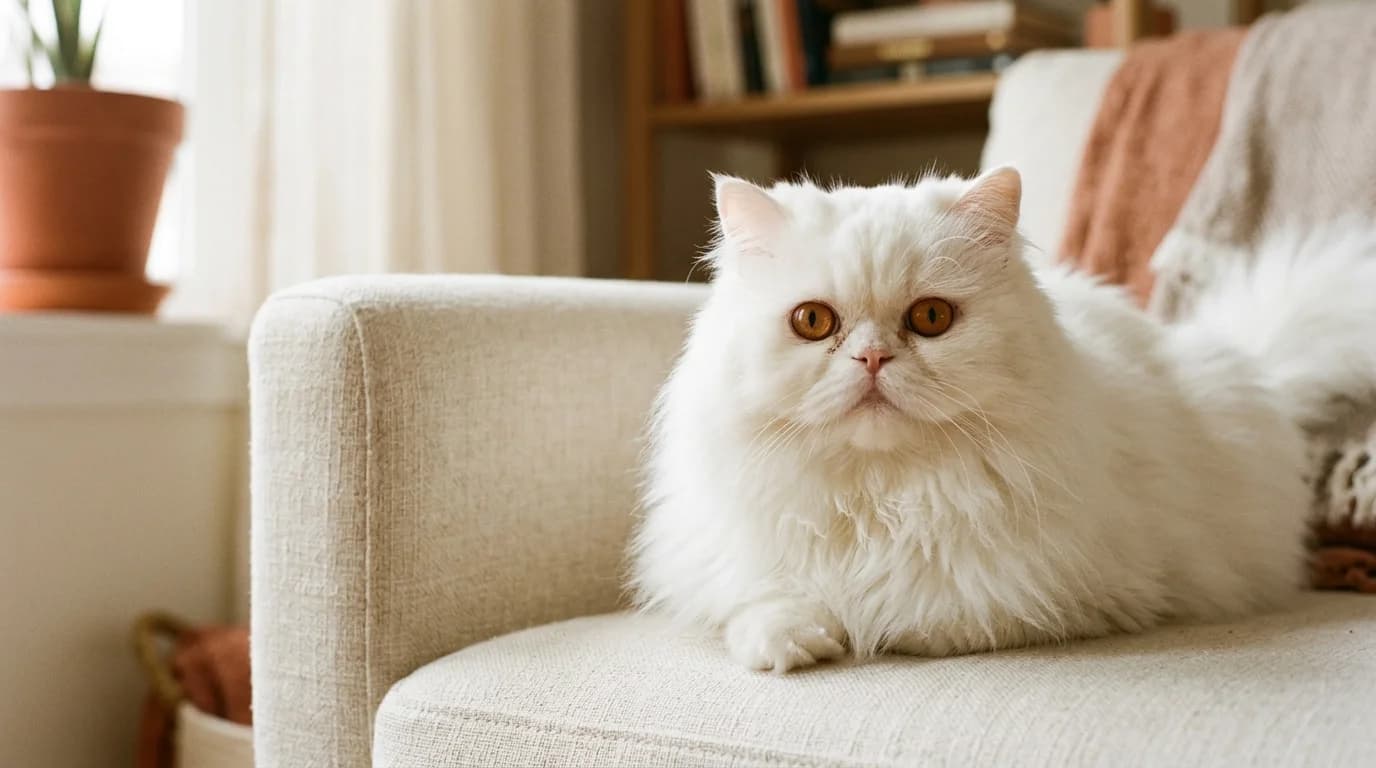
Persians, Himalayans, Exotic Shorthairs, and similar brachycephalic breeds are defined by the flat short face, enormous round eyes, and a coat that forms a cloud around the body in the long-haired versions. The right styles emphasise the eyes and the coat without exaggerating the face into something that reads as alien. Watercolor is the universal default. Renaissance oil works for formal walls, because the dignified composition makes the breed look regal rather than odd. Avoid pop art and cartoon for Persians, they tend to caricature the face in ways that real Persian owners find unflattering.
Maine Coons and other large semi-longhair breeds
Maine Coons, Norwegian Forest Cats, and Siberians have a different brief. The size matters, the lynx tip tufts on the ears matter, the neck ruff matters, and the long bushy tail matters. The best styles are the ones that capture the breed’s scale and slight wildness. Renaissance oil is genuinely spectacular for Maine Coons, because the breed photographs like a small lion and oil paint leans into that. Watercolor is the softer alternative and works beautifully for kittens or for memorial portraits. Anime can work if your Maine Coon has a personality you want to push forward, but it sacrifices the regal quality.
Short-haired breeds (British Shorthair, Russian Blue, Burmese)
Short-haired breeds reward styles that emphasise the sleekness of the coat and the geometry of the face. Oil painting is exceptional for British Shorthairs in particular, because the round face and dense coat read like sculpture. Anime is the surprise pick for Russian Blues and Burmese, where the angular faces and bright eyes translate into striking graphic portraits. Watercolor is still safe but feels less essential, because the cat does not need softening.
Siamese and other pointed breeds
Siamese, Balinese, and other colourpoint breeds have a high-contrast coat pattern (light body, dark face mask and points) that fights some styles and flatters others. Oil painting handles the contrast beautifully when paired with a warm backdrop. Watercolor risks washing out the contrast, ask for a slightly cooler paper tone to preserve it. Pop art is the unexpected winner here, because the breed’s natural high-contrast pattern translates into graphic blocks of colour that look intentional rather than crude.
Domestic Shorthair and Mixed (the mighty unspecified cat)
Most cats in the world are mixed-breed shorthairs, and they make up roughly half of our cat portrait orders. The good news is that they are stylistically the most forgiving subject we have. Tabby patterns photograph well in every style we offer. The right pick comes down to the personality of the individual cat, not the breed. A confident outdoor tabby suits oil. A soft indoor lap cat suits watercolor. A weird, judgmental sphynx-curious tabby suits anime. Trust the cat, not the breed chart.
“Quick rule of thumb: long-haired and fluffy breeds love watercolor. Short-haired and sleek breeds love oil. Cats with strong markings or contrast (Siamese, calico, tabbies with big M-marks) love pop art and anime. Mixed breeds can go anywhere.”
What ruins a cat portrait, in any style
- Photos taken from above. They flatten the face and lose the eyes. Get to the cat’s level.
- Closed or squinted eyes. Cat portraits live or die on the eyes. Wait for a wide-eyed moment.
- Group photos with multiple cats and one chosen for the crop. The crop loses pixels. Take a single-cat photo from the start when possible.
- Photos where the whiskers are cut off by the frame. Whiskers do disproportionate work in cat portraits, especially in oil.
The verdict by breed
- Persian: Watercolor for soft, Renaissance oil for regal.
- Maine Coon: Renaissance oil. Nothing else matches the breed’s natural grandeur.
- British Shorthair: Oil. The coat reads as sculpture.
- Siamese or pointed breeds: Oil with a warm backdrop, or pop art.
- Mixed shorthair: Pick the style that matches the cat’s personality, not the breed.
Frequently Asked Questions
The questions readers ask us most about this topic.
Will the AI know what breed my cat is?
The AI keys off visual traits in your photo, not a breed label. If your cat looks Persian, it will render as Persian. The breed-specific landing pages help you find tuned style examples, but the upload itself is what matters.
My cat is part Maine Coon, part mystery. Which style should I pick?
Go with the trait that dominates the photo. If the lynx tufts and neck ruff are visible, lean into Renaissance oil. If the photo emphasises softness and a fluffy coat, watercolor will flatter it more. Generate both, the side-by-side will tell you which read is stronger.
Are cat portraits really worth canvas, or should I get a digital?
Cat people in our data buy canvas at a higher rate than dog people, especially for long-haired breeds. The coat detail benefits from size. If the cat is short-haired, digital is fine. If the cat is fluffy or has dramatic markings, canvas pays off.
Can I get multiple cats in one portrait?
Yes. We routinely render two and three-cat portraits. Watercolor and Ghibli handle multi-cat groupings most gracefully because the soft edges blend the composition. For three or more cats, ask for a horizontal canvas rather than a portrait orientation.
My cat has a notched ear or a missing eye. Will the AI render that accurately?
Usually yes, if the feature is clearly visible in the photo. Customers often ask us specifically to preserve a rescue cat’s notched ear or scar as a mark of identity. Mention it in the custom portrait field if you want to be sure.
See what your photo can become.
Generate a free preview in three styles. No credit card, no commitment, results in under three minutes.
Start My Free Preview